

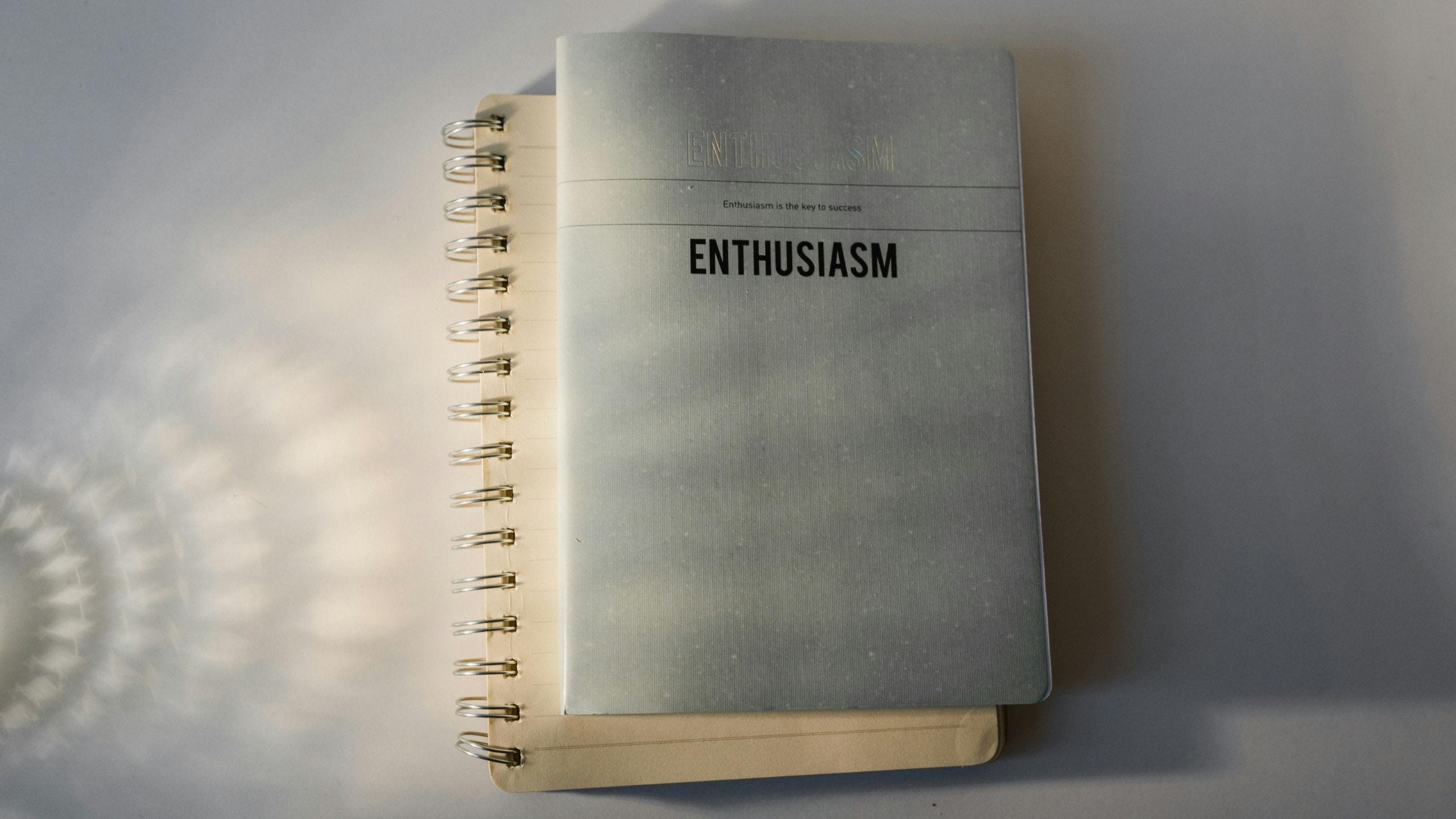
A Workout While Waiting For Piano Lessons
Only a week ago, I was leading a 4.5 day marketing retreat here at the Lila Music Studio.
Twenty people had gathered in the yurt for the morning session.
From my place at the front, I looked up to see a man approaching the yurt and sitting on the deck. I assumed he was the partner of one of the participants and, as he was waiting patiently, I thought nothing of it.
During the next break, I ran into him standing beside the woodpile and went up to introduce myself.
“Hey there! I saw you earlier. I’m Tad. How are you connected to this all?”
“I actually just found you online today and so thought I’d come here to get involved!”
“Ah!” I said. “You’re wanting to join the marketing workshop?”
“No. I wanted to get some piano lessons!” He seemed from the small conversation that ensued to want to play piano that day. Right now, if a piano was available. He seemed manic is a way that didn’t allow real contact with others.
I realized what had happened and let him know that Cari, who ran the Lila Music Center, wasn’t there and that he’d have to email her directly.
He expressed his thanks and then went on to tell me, very enthusiastically, about how he’d just left the United States, escaping the ‘Orange Facist’ and that he found himself on this great adventure. I could see the excitement in his eyes, seeing, in every Canadian he met, a new-found friend, an ally in the cause and someone who would, naturally, be happy to gather him into the folds of instant and lifelong kinship. The pre-emptive sense of ‘we’ is what often justifies the enthusiasm and eliminates the need to tend to any boundaries. He thought there was enough of a ‘we’, with no evidence to back it up, to justify using my weights and doing a workout on the land.
I wished him well and went back to the yurt.
Twenty minutes later, I’d given the group another exercise and something in me told me, “He’s still there.”
And so, I walked back up to the woodpile and there he was, talking with a woman living on the property.
“Is there something else I can help you with?” I asked him.
“No no. Your friend was being very helpful! I just gave her my number and I was just going to finish my workout before going.”
It took a second to register what he was saying. He had been using my weights to do a workout for the past twenty minutes.
“Just one more round!” he smiled.
I felt dazed by the whole thing and saying, “Ok. One more round.” I walked up to the house to gather the participants back.
The next day, I got his number from my friend and texted him.
“Is this Martin? It’s Tad you met the other day. I wanted to check in about your visit.”
He replied quickly, “Hi Tad - I appreciate your follow up. Yes - do let me know about the piano options. Incidentally, your farm is heaven on earth :-) Enchanting and edifying space.”
I called him and he answered, “Martin. Thanks for making the time to speak. So, there are a few things I want to share here. First, you used my weights without my permission. That’s not ok.”
This understanding on not touching things that don’t belong to you is something I think most of us would find in our ancestry.
Immediate defense, “Tad! I would never interrupt your workshop! I would…”
“Martin,” I interrupted. “You used my weights without my permission. That’s not ok.”
The defense found its core, “It was just a spontaneous thing! It was just…”
‘Just’. There’s that word again. At no point in the conversation was there an apology from him. No remorse. Only a lashing out in confusion and accusation that somehow I didn’t get it because, of course, his ‘spontaneous’ enthusiasm exonerated him from any consequence to his actions.
“Martin,” I interrupted more tersely. “You used my weights without my permission. That’s not ok. Secondly, you scared the woman you were speaking with.” She’d told me after that his unstable energy had frightened her and that, in her pocket, she’d threaded her keys through her knuckles.
“What? She was nothing but kind to me!”
“Martin. She was frightened by you.”
“This is crazy! She was nothing but kind to me! This is crazy. This is…”
“Martin!” I snapped. “Martin. Listen to me. What’s crazy is showing up to a stranger’s property, where you know and are known by no one, staying as long as you did and freely using their weights to workout. That’s crazy. I am giving you feedback on the intense energy you showed up with.”
“This is crazy!”
“And Martin… Number three. Don’t come back. You’ll have to find your piano lessons elsewhere. Am I clear?”
Silence. I could feel him shocked, hanging in the briars and reeling with the unfairness of it all. That third thing hadn’t been a given at the start of the call but his reaction to the first two conjured it.
He hangs up.
Enthusiasm.
It seems like a universal good.
A panacea for living life with passion and following one’s bliss.
When you dig into the etymological roots of the word, you find.
c. 1600, from French enthousiasme (16c.) and directly from Late Latin enthusiasmus, from Greek enthousiasmos "divine inspiration, enthusiasm (produced by certain kinds of music, etc.)," from enthousiazein "be inspired or possessed by a god, be rapt, be in ecstasy," from entheos "divinely inspired, possessed by a god," from en "in" (see en- (2)) + theos "god" (from PIE root *dhes-, forming words for religious concepts).
From God.
Well, that’s good.
It wasn’t until around 2006, when I began to see the shadow side.
The word takes a historical turn which brings us to the point of this essay.
The English word acquired a derogatory sense of "excessive religious emotion through the conceit of special revelation from God" (1650s) under the Puritans; the generalized meaning "fervor, zeal" (the main modern sense) is recorded by 1716.
And that all takes me to the world of sales and marketing where enthusiasm in encouraged, ennobled and enthroned.

All the money raised from your pledges to this Substack go to support the work of indigenous, cultural activist Kakisimow Iskwew.
"You proselytize to rid yourself of doubt, not to spread the good news." - Jessa Crispin
On Enthusiasm in Sales:
In the world of marketing and sales (which I know something about) I’ve heard much conversation about the importance of creating ‘momentum’ and ‘buying energy’, ‘transferring our passion’ and how the person who is most certain will dominate the situation.
None of which takes into account the wants, desires and sovereignty of the other person.
It was Ari Galper who was the first warn me about the dangers of enthusiasm in sales.
What I learned from him, led me to, years later, record a video on the topic as well:
The Outspoken Man At The Storytelling Event:
A while back, I was co-hosting an afternoon of storytelling on the tale Briar Rose.
At that session was a man who dominated the space with his words. There were twenty people and he must have spoken a quarter of the time. Whenever myself and my co-presenter would finish a sentence and pause, he would fill it. So much so that she and I stopped pausing because we knew he’d jump in. A consequence of this was that the material was never able to actually land.
In truth, we should have checked in with him during the break but we didn’t and so, not wanting a grudge to fester, I texted him telling him I’d like to check in about something and, the next day, we were on a call together.
I shared the feedback and his immediate response was this: “I was just being enthusiastic.”
Note the use of the word ‘just’ in that sentence. As in ‘it’s no big deal’. As in, ‘you are clearly over-reacting’.
I thanked him for his time and made a mental note that this was likely not someone I could work with in the future though he does good work in the world and I wish him well.
There is a particular irony here given that this story, Briar Rose, the Grimm’s version of the old Sleeping Beauty story contains this passage:
A legend circulated throughout the land about the beautiful sleeping Little Brier-Rose, for so the princess was called. Legends also told that from time to time princes came, wanting to force their way through the hedge into the castle. However, they did not succeed, for the thorns held firmly together, as though they had hands, and the young men became stuck in them, could not free themselves, and died miserably.
The passage is a clear warning that enthusiasm is not consequence free.
In the following days, when asked by my compatriot to be more mindful of the amount of space he was taking, demured attending her event saying that he was realizing he was ‘too feral’.
And, this of course, points us to what might, perhaps, have been at the root of the shift in this word. We’ll return to this at the end.
The Feral Ones
In 2017, I read The Shepherd's Life by James Rebanks. I wanted to share a passage from it,
"Shepherds hate other people's dogs near their sheep. Whilst our sheepdogs are our proudest and most loved servants, other people's dogs pose thing but a problem to all of us, because a dog that hasn't been trained and is left off the lead near sheep can get too excited and go into full hunting mode. It can be difficult to get dog owners to understand the threat, but about once every two years, throughout my adult life, a dog has given chase to a sheep or a lamb and before you know it the sheep is pulled down, or lies down, exhausted. Because the dog has not been trained to control itself in these situations, it tears at the wool or the skin, until you have a sheep it its ears torn, or its throat ripped out. About once every month we have a dog incident that threatens to escalate... One person's freedom is another man's misery."
The problem of course, isn't with all canines. It's not inherent in the canine species to behave this way. Foxes and wolves don't do this. They hunt to kill and eat. Wild animals do not kill for sport. They have been raised in the wild and been mentored by the older animals in their packs. They've seen how it is and how to behave. They know that there is no bowl of food waiting for them at home to feed them.
Other trained sheepdogs would not do this. They know how to behave around sheep. They know they have a bowl of food at home and that, with these animals, their role is that of protector, not predator. They're there to corral them, not kill them.
Feral animals do this. A feral animal is stuck between domesticated life and their inner wildness. They're neither fully trained neither fully wild and so, when their blood gets up, they don't know what to do with those feelings. And so animals get chased and mauled but then not eaten. I suppose to the feral animals, it's all good sport. It's fun. I don't imagine there are any bad intentions on the dog's part. Being stuck in between worlds, they don't see what a violation of the natural way of things it is. They are simply doing what feral dogs know to do.
Of course, the shepherd isn't really mad at the dog. The dog is just doing what comes naturally to it. They're mad at the dog's owner for letting them off their leash. Some owners have no idea the havoc their dogs can wreak. Others do but, perhaps thinking they'll get away with it, or because they see no sheep nearby or just because, at the end of the day, they value their freedom to go for a beautiful countryside walk more than they value sheep of the farmers and the farmer's time and emotional well being.
It seems to me that there are parallels here between this and the ways that I have seen white men approach conversations about racism. It seems like a feral approach. And yet, white people can't seem to understand why people of colour do not want them anywhere near their carefully tended flocks of conversations and experiences around racism. People of colour have had so many experiences of white people, tethered to no one or nothing that might know better about how to engage or not engage with this exciting new thing, who simply charge into the fray, their nervous systems shot to overwhelm and lacking a deep, indigenous and respectful approach or any training on how to contend with these issues. And they've seen the damage it causes while the white people trot off, pleased with themselves and the fun they've had while their flock has been badly frightened and some injured or killed.
A wild animal is tethered to its wildness and its pack.
A domesticated animal is tethered to its training and owners.
A feral animal is tethered to nothing.
And, in this modern, freedom-addicted, limit-hating and growth-obsessed world, many people seem to be tethered to nothing at all. Not to land. Not to people. Not to community. Not to consequence.
The Guests At The Party
I recall hosting a party once and a woman who, until that moment, I had deeply respected, brought two guests: a husband and wife. The wife carried a spiritually aloof vibe that was strange but forgivable.
The husband wandered around making all of the women uncomfortable with how much he was touching them. When they told him not to touch them, he told them they shouldn't go to parties if they didn't want to be touched.
I sent a terse email to my friend letting her know that those people were not welcome at my parties anymore.
The Mystery of the White Man
This dynamic of feral enthusiasm has often appeared in interactions between settlers and indigenous people.
In his essay The Mystery of the White Man, Cree author Harold Cardinal, writes,
Much of the misunderstanding between white and Indian races in Canada arises because of basic ignorance about the differences between them. Some aspects of this difference are strongly developed in an article entitled “American Indians and White People” by two leading anthropologists in the United States, Rosalie H. Wax And Robert K Thomas:
“Social discourse is one of the areas where Indians and whites most easily misunderstand each other… From childhood, white people and Indians are brought up to react to strange and dangerous situations in quite different ways. The white man finds himself in an unstructured, anxiety-provoking situation is trained to react with a great deal of activity. He will begin action after action until he either structures the situation, or escapes from it, or simply collapses. But the Indian, put in the same place, is brought up to remain motionless and watch. Outwardly, he appears to freeze. Inwardly, he is using all of his senses to discover what is expected of him – what activities are proper, seemly, and safe. One might put it this way: in an unfamiliar situation a white man is taught to react by aggressive experimentation – he keeps moving until he finds a satisfactory pattern. His motto is ‘Try and try again’. But the Indian puts faith in observation. He waits and waits until the actors show him the correct patterns…”
I would submit that the shift in etymology of that word ‘enthusiasm’ is not disconnected from the shift from cultured humanity who were tethered to and by their domesticated marriage with the wild to our modern, culture-starved feral iteration.
This feral enthusiasm shows up in all the stories above, in men who are too handsy, women who make reckless and unsafe decisions, christians, vegans and cross-fitters who proselytize even when asked not to and many more situations.
Cultured enthusiasm is the mix of inspiration, excitement and passion with a deep respect and a capacity for real admiration for the other.
Cultured enthusiasm, has, like all wild-animals do, a respect for the territorial boundaries of their kith and kin.
Feral enthusiasm, tethered to nothing but hungry for anything, might be understood as the eclipsing of the Holy in nature, the seeing it as fuel for the machine of our manias and seeing others as resources instead of relatives, resulting in repeated transgression of boundaries in which consequences are erased and justified with the admonishment that they were ‘just being enthusiastic’.
‘Enthusiasm’ is often the rebranding of ‘I’m starving and undone by my hunger.’
Feral enthusiasm is a danger to the hedge of the world and to the ones in its thrall.
Cultured enthusiasm, from which I submit the original definition comes, might be one way of understanding how God, through us, appears in this world.
So much clarity came from reading this – about friends, relatives, colleagues, random intruders, and especially about myself. I moved to Santa Fe recently and had the sense that I need to wait and watch, see what’s already going on, and then respond. I’ve kept myself on a leash before diving in with my enthusiasm to Make Great Things Happen in the way I would have done in the past. It feels a little weird, but also more centered and I’m sure I’ve avoided some missteps. Your article gives me the language for my intuitions. Thank you, Tad.
Thanks Tad. This helps. I could feel that man's lost but frenzied hunger for belonging, and I've seen it in myself before - high off my own making of joy and exuberance.